

-24%
Low profile scissor lift tables
25 products
-21%
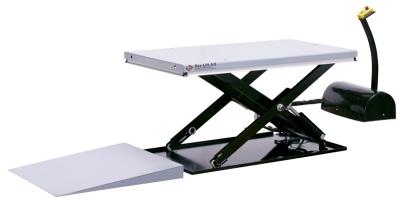
-24%
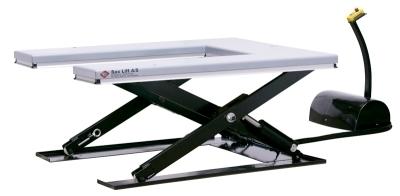
-24%
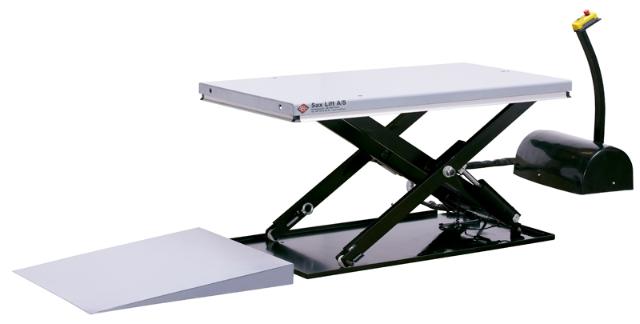
-21%
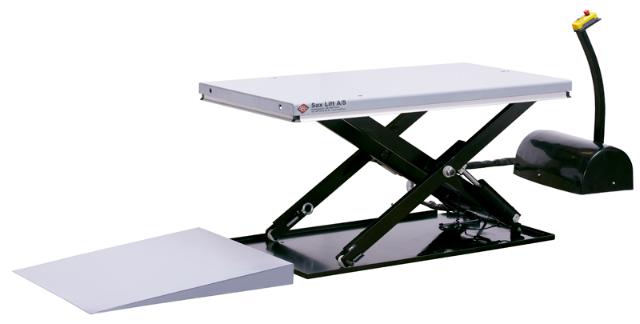
-24%
25 of 25 products
Low Profile Scissor Lift Tables - Pallet Lift Tables
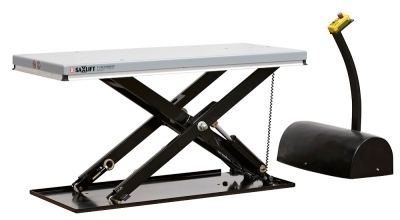
Low profile scissor lift tables are a game-changer for efficient and safe pallet handling tasks within modern industrial environments. As supply chains accelerate and the demand for rapid turnaround times increases, the need for equipment that bridges the gap between manual labor and heavy automation becomes critical. These lifting solutions are compact, handle loads up to 3000 kg, and feature functional designs, making them ideal for warehouses, manufacturing plants, and retail spaces where floor space is at a premium and pit installation is not an option.
With extensive customization options, strict adherence to European safety standards, and a focus on durability, a Low Profile Scissor Lift Table elevates your operational efficiency to new heights. Whether you are dealing with standard Euro pallets or specialized industrial containers, these tables provide the ergonomic support necessary to protect your workforce while maximizing throughput. Ready for a deeper exploration into maximizing the potential of your workspace? Let's walk that journey together and discover how this technology can transform your material handling workflows.
Discover the Benefits of Low Profile Scissor Lift Tables for Your Business
If you are looking to enhance your operational efficiency, low profile scissor lift tables could be your answer. In an era where workplace safety and productivity must coexist, these tools serve as the backbone of ergonomic lifting strategies. They essentially eliminate the need for workers to bend, stretch, or strain when loading and unloading pallets, which are common causes of workplace injury.
These ergonomic devices can greatly increase your load capacity, making the movement and management of goods simpler and safer. They are designed with user comfort in mind, minimizing the physical strain of manual lifting. By maintaining the load at an optimal working height, operators can maintain a neutral posture, significantly reducing fatigue over long shifts. With a maximum load capacity of up to 3000 kg and lengths ranging from 900 mm to 4000 mm, they are suitable for various applications, from small packing stations to large-scale assembly lines.
Furthermore, the implementation of a Low profile electric scissor lift table can streamline workflows by reducing the time taken to transfer goods. Because these units sit almost flush with the floor, they interface seamlessly with standard hand pallet trucks, removing the bottleneck of waiting for forklifts or using steep ramps that pose their own safety risks.
What is a Low Profile Scissor Lift Table?
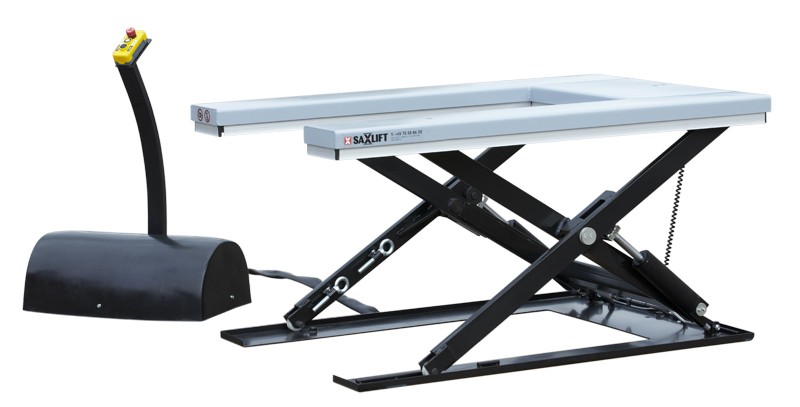
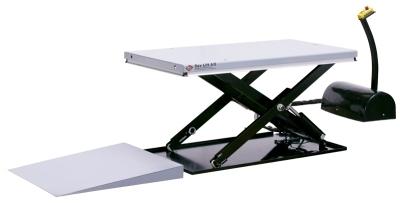
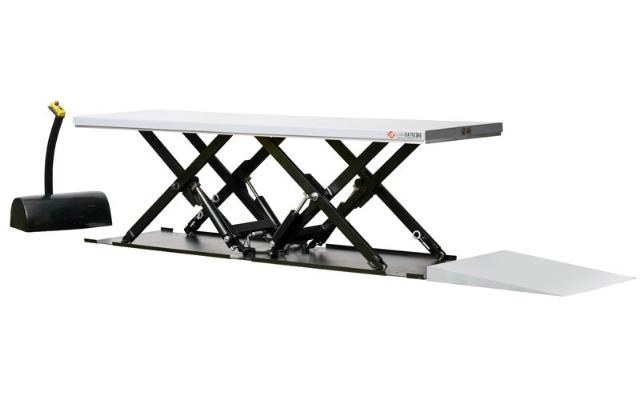
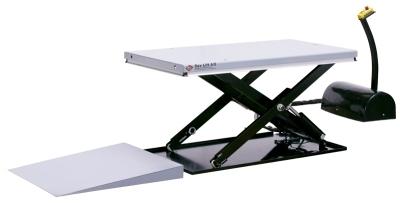
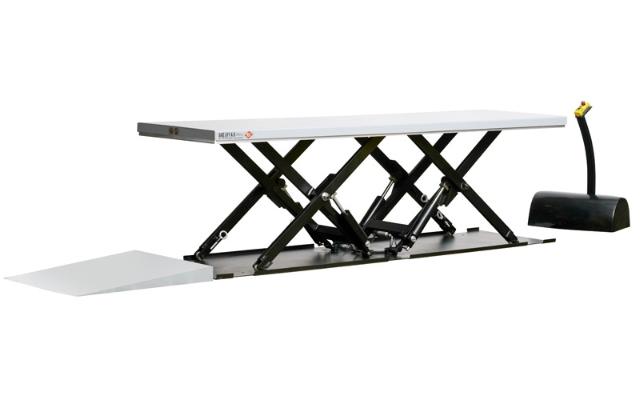
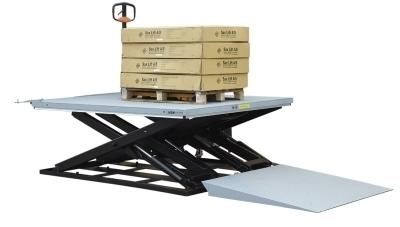
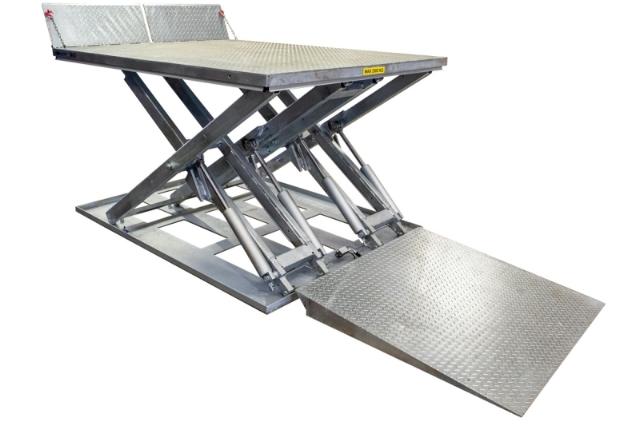
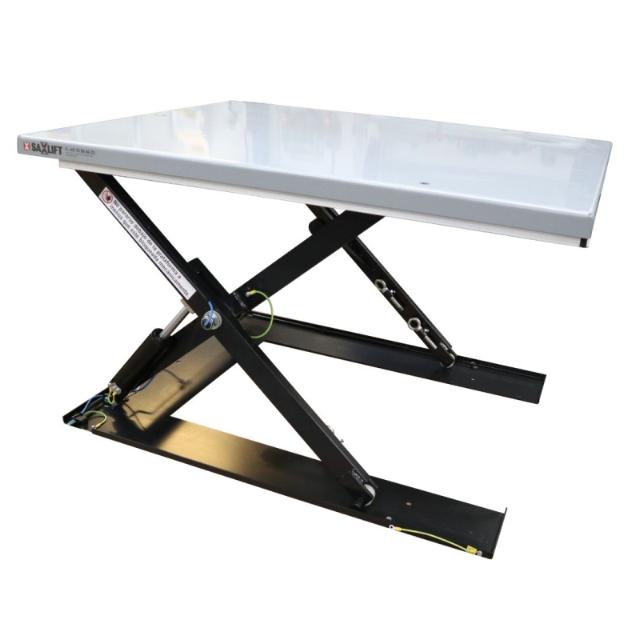
You might be wondering, what exactly is a Low Profile Scissor Lift Table? In the broad category of material handling equipment, this specific device stands out due to its extremely low closed height. Unlike standard lift tables that require a pit to be dug into the concrete floor so that the platform sits flush with the ground, a low profile version is designed to collapse down to a height of approximately 80mm to 100mm.
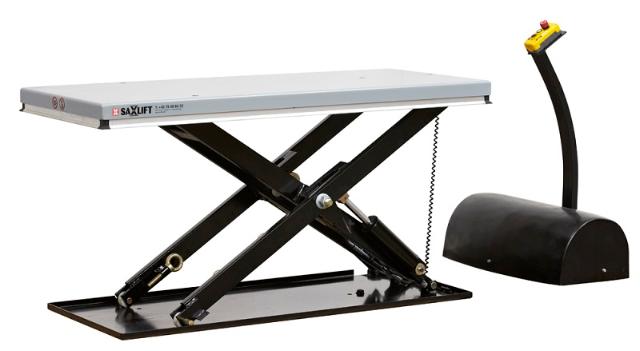
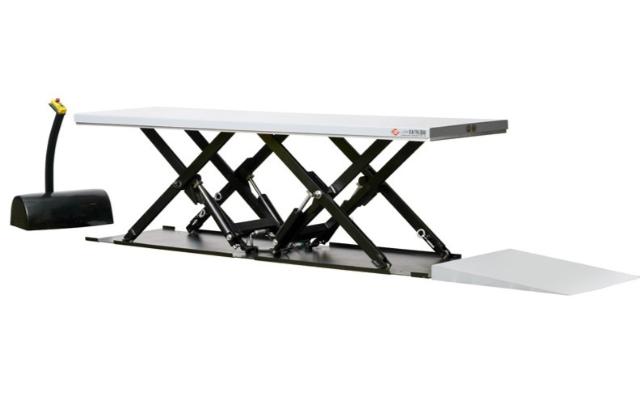
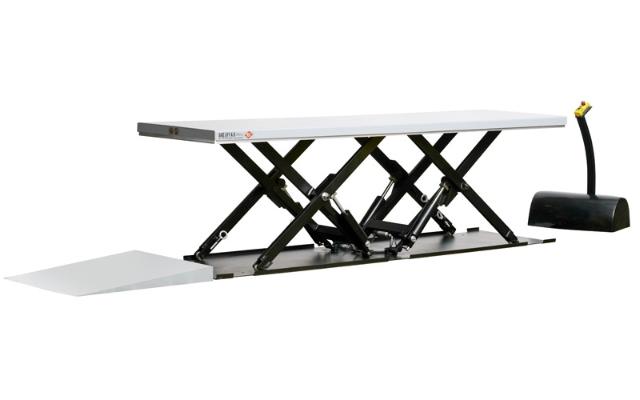
It is a uniquely designed lifting device that functions by contracting and expanding, similar to a scissor mechanism. This mechanism is powered by a hydraulic system, often with an external power pack to allow the table to compress fully without internal components blocking the descent. Let's discuss its design, how it operates, and its key specifications in detail to understand why it is the preferred choice for facilities that cannot excavate their floors.
How Does a Low Profile Scissor Lift Work?
While it may seem complex, the operation of a low profile scissor lift table is quite straightforward. At its core, the system converts electrical energy into hydraulic pressure, which then creates mechanical motion.
You see, the low profile lift relies on a hydraulic system to function. When you apply pressure to the hydraulic pump (usually via a hand-held control unit or a foot pedal), it pushes hydraulic fluid into the cylinders. This increases the liquid pressure and extends the pistons, triggering the lift. Because space is tight under the platform, the cylinders are positioned horizontally or at a shallow angle, using a wedge or cam action to initiate the vertical lift effectively.
With a robust load capacity, these tables can carry substantial weight. The hydraulic system effortlessly adjusts the working height, giving you flexibility on the job to stop the load at the exact millimeter required for the task. The 'scissor' mechanism of the lift is designed to fold neatly, granting it a low profile when not in use. When utilizing a Low profile electric scissor lift table, the electric motor drives the pump, ensuring a smooth, quiet, and emission-free operation suitable for indoor use.
Key Specifications of Low Profile Lift Tables
Building on the concept of how a low profile scissor lift table operates, understanding its key specifications provides further insight into its efficiency and versatility. When selecting a unit, you aren't just buying a metal table; you are selecting a machine defined by precise engineering metrics.
You will find that a low profile lift table can have a load capacity of up to 3000 kg, making it suitable for a variety of applications, from lifting light electronics to heavy automotive components. The platform length typically ranges from 900 mm to over 4000 mm, giving you flexibility in choosing the right fit for your needs. The lift stroke—the distance the table travels vertically—is another crucial spec, usually sufficient to bring a pallet to a comfortable waist height for an operator.
Customization is a key feature, with various designs and accessories available to tailor the table according to your requirements. This includes turntables integrated into the platform, allowing the worker to rotate the pallet and access all sides without walking around it. Whether you need to handle pallets with hand pallet trucks or provide accessibility solutions for facilities, a Low Profile Scissor Lift Table offers an effective solution.
What are the Key Features of Low Profile Scissor Lift Tables?
You might be curious about the key features that distinguish Low Profile Scissor Lift Tables from other lifting equipment. Beyond their height, these tables are engineering marvels designed to withstand the rigors of daily industrial use while complying with strict safety regulations.
These tables are known for their impressive capacity and load handling capabilities, with some offering electric or manual operations. However, the electric-hydraulic version is the industry standard for efficiency. Let's also consider their design, which prioritizes ergonomic use, making them an efficient and user-friendly choice for operators of all skill levels.
Capacity and Load Handling Capabilities
Low Profile Scissor Lift Tables come with a robust load capacity that can handle up to 3000 kg, making them a reliable choice for heavy-duty applications. The handling of such substantial loads is facilitated by an electric lifting mechanism, ensuring smooth and efficient operations. This is crucial when handling fragile goods, as the hydraulic motion is steady and free from the jerking movements associated with mechanical chain lifts.
This capacity is further reflected in the table's design, accommodating lengths from 900 mm to 4000 mm. The structural integrity is maintained through the use of box-section steel scissors and heavy-duty pivot pins. You can trust these tables to handle your heaviest loads with ease. They are equipped with lifting eye bolts for flexible transportation and installation, allowing you to move the unit into position using an overhead crane or forklift.
Plus, they comply with European safety standard EN 1570-1:2024 and are CE certified. This certification ensures that the table meets rigorous requirements regarding stability, structural strength, and safety devices, giving you peace of mind regarding liability and worker protection.
Design Considerations for Ergonomic Use
To guarantee ergonomic use, several design factors are critical in Low Profile Scissor Lift Tables. The primary goal is to adapt the task to the worker, not the worker to the task. You will notice the importance of the table's height, which can be adjusted to suit your specific needs, improving efficiency and comfort. This height customization eliminates unnecessary strain, promoting better posture and reducing the risk of injury, specifically Musculoskeletal Disorders (MSDs) which are a leading cause of lost workdays.
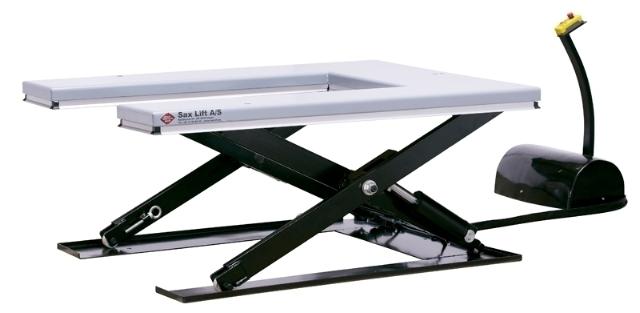
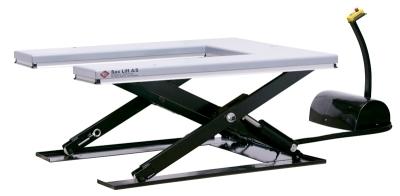
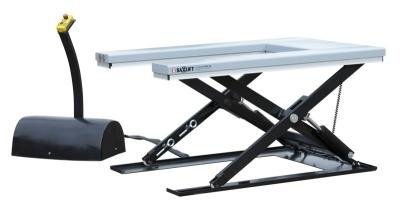
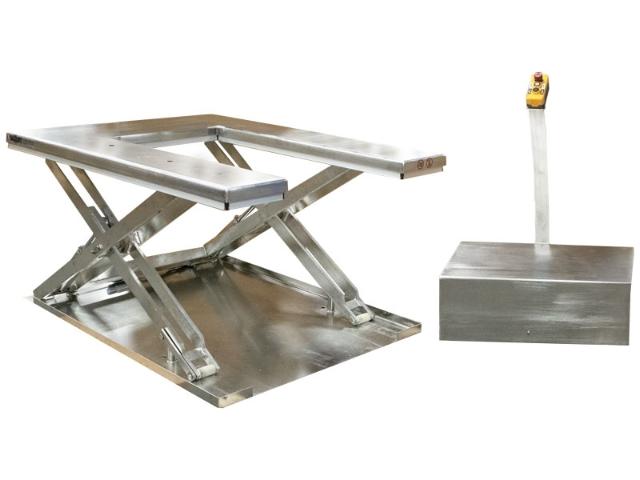
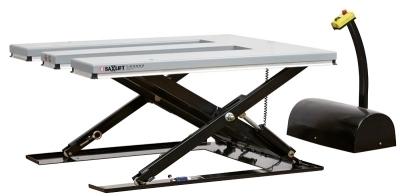
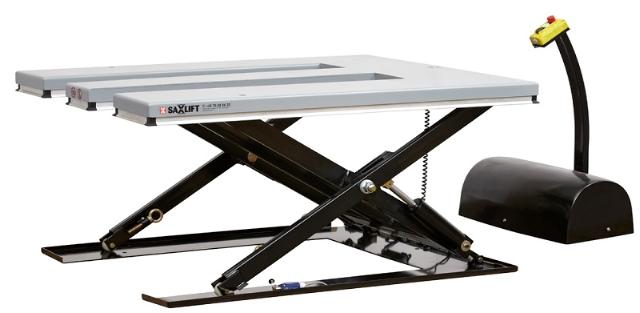
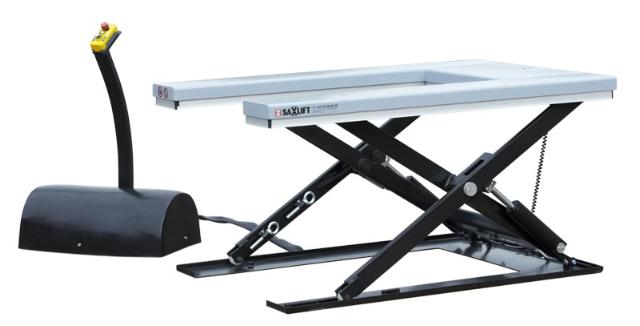
Furthermore, the table's ergonomic design aids in the smooth handling of operations. Its efficient design guarantees loads are managed with ease, boosting your productivity levels. The U-shaped platform is a prime example of ergonomic design; it allows a hand pallet truck to deposit a pallet directly onto the table without a ramp. This separation allows the pallet truck to be withdrawn, leaving the pallet on the lift, ready to be raised.
You will appreciate the customization options available, allowing you to tailor the table to your unique requirements. From adjustable heights to custom-designed solutions like tilting platforms that angle the load toward the user, these tables are all about enhancing your work environment's ergonomics.
How to Choose the Right Low Profile Lift for Your Needs?
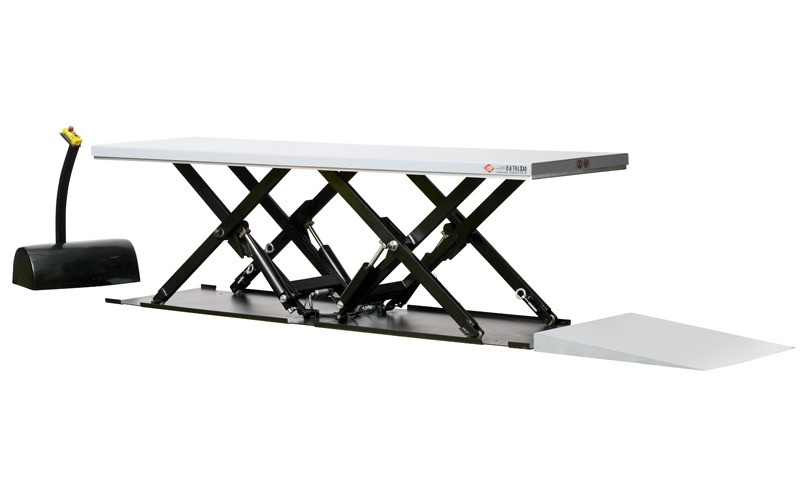
Choosing the right low profile lift for your needs relies on a few key considerations. It is not a one-size-fits-all purchase. The difference between a U-shaped, E-shaped, or solid top table can significantly impact your workflow efficiency.
First, you will need to assess your lifting capacity requirements – how heavy are the items you will be lifting? You must consider not just the average load, but the maximum possible load. You will also need to determine the ideal working height for your operations and consider factors affecting installation and space, such as the location of power outlets and the flow of traffic in your warehouse.
Assessing Your Lifting Capacity Requirements
How do you determine the right Low Profile Scissor Lift Table for your operations? Start by evaluating your load capacity needs. This is essential as too much weight can compromise safety and functionality. The load capacity of a lift table typically maxes out at higher ranges, but standard models often sit around 1000kg to 2000kg, with customization options available to meet your specific needs up to 3000kg or more.
It is important to understand the distribution of the load. Is the weight evenly distributed across the pallet, or is it off-center? An evenly distributed load is easier to lift, while an off-center load requires a table with higher structural rigidity. Safety is another key consideration. Look for features such as overload protection, which prevents the lift from operating if the weight exceeds the design limit, and safety spacing between moving parts to prevent shearing injuries.
Finally, consider the installation process. Lift tables often come equipped with lifting eye bolts for easy installation, but you must ensure your floor is level and capable of supporting the point loads generated by the scissor legs.
Determining the Optimal Working Height
While picking the right lift table, you should also consider the ideal working height for your needs. This is not just about the lift's ability to raise a pallet; it is about matching the lift height to the height of your conveyors, workbenches, or the average vertical reach of your operators.
It is about finding a solution that provides flexibility and efficiency for your operations. Here is a simple guide to help you:
- Measure the Height: Ascertain the highest point your load needs to reach. If you are feeding a machine, measure the intake height exactly.
- Consider the Load: Heavier pallets may affect the lift's stability at maximum height. Ensure the model selected is rated for full capacity at full extension.
- Remember Flexibility: A lift with a range of heights provides greater versatility for different tasks. A Low profile electric scissor lift table with infinite stop positions allows for micro-adjustments.
- Think about Comfort: A suitable height reduces strain on workers, boosting productivity. The ideal height is usually between 750mm and 1000mm for manual handling tasks.
Factors Affecting Installation and Space
Even though you have determined the perfect working height for your operations, finding the right low profile lift also requires careful evaluation of your space constraints and installation requirements. You will need to choose a compact lift that fits well within your workspace, leaving enough room for operators to move around it safely. Additionally, verify the lift can handle the load capacity you need for your needs.
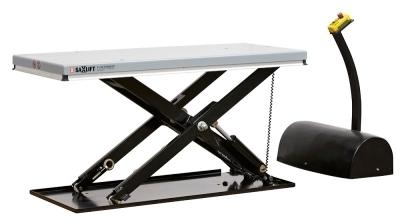
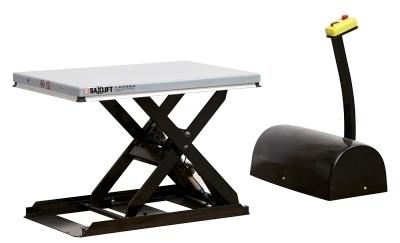
The remote power pack is a specific consideration for low profile tables. Since the pump and motor are external, you need a location to place this small box (usually on a wall or a stand) within the reach of the hydraulic hoses (typically 3 meters). The table below presents some factors to take into account when selecting a low profile lift:
| Factor | Importance |
| Load Capacity | Verify the lift can handle your load requirements including safety margins. |
| Compactness | Your lift should fit comfortably in your workspace, considering the swing radius of pallet trucks. |
| Customization | Opt for lifts that can be customized to your needs, such as adding photocells for auto-indexing. |
| Power Supply | Check if your facility requires single-phase (230V) or three-phase (400V) power. |
What Industries Benefit from Low Profile Scissor Lift Tables?
You might wonder which industries stand to gain the most from using Low Profile Scissor Lift Tables. The versatility of these units allows them to be deployed in almost any sector where heavy objects need to be raised or lowered.
Consider sectors like warehouse and distribution, where efficient material handling is key to meeting delivery windows. Similarly, production lines in manufacturing, as well as retail environments requiring pallet handling, can also see significant benefits. Even industries like pharmaceuticals and food processing utilize stainless steel versions of these tables to maintain hygiene standards while lifting heavy ingredients or packaging materials.
Warehouse and Distribution Solutions
Widely used in a variety of industries, low profile scissor lift tables offer significant benefits for warehouse and distribution solutions. Speed is the currency of logistics, and these tables facilitate rapid packing and unpacking.
With their impressive load capacity, they can handle heavy goods effortlessly, enhancing your facility's efficiency. In a "goods-to-person" picking strategy, the lift table keeps the pallet at the correct height, so the picker doesn't have to bend down for the bottom layer of boxes.
- Load Capacity: These lift tables can support weights up to 3000 kg, making them ideal for heavy-duty use in shipping docks.
- Safety: Equipped with safety features like overload protection and safety spacing, you are assured of a safer working environment, reducing the liability associated with warehouse accidents.
- Customization: Whether it is U shaped for hand jacks, E shaped for center support, or solid lift tables, customization options are available to suit your specific needs.
- Applications: Ideal for pallet handling with hand pallet trucks, scissor lift tables offer diverse applications, promoting ease and efficiency in warehouses and distribution centers.
Manufacturing and Production Efficiency
Moving on from warehouses and distribution centers, let's shift our focus to the manufacturing and production sector. In assembly lines, a Low profile electric scissor lift table is often used as a workstation adjustment tool.
Low Profile Scissor Lift Tables are not only suitable but also instrumental in enhancing efficiency in these industries. By facilitating the smooth lifting and transportation of heavy loads, they considerably streamline the supply chain within the factory floor. This leads to quicker production times and greater output. For example, in the automotive industry, engines or heavy components can be lifted to the exact height required for a technician to install parts without bending.
The tables' robust nature can handle the strenuous demands of manufacturing, making them a reliable tool in your production line. They are perfect for handling bulky goods, reducing manual labor and the risk of worker injury. Additionally, they can be integrated into automated systems, interacting with conveyors and robotic arms to position materials precisely.
Retail and Pallet Handling Applications
In the bustling world of retail, efficiency is king, and Low Profile Scissor Lift Tables are playing an essential role. Back-of-house storage areas in supermarkets and large retail stores are often cramped and lack forklifts. These tables allow staff to move pallets from the delivery truck to the stockroom floor using only hand pallet jacks.
They are a game-changer in pallet handling, enhancing speed and safety in your operations. In customer-facing environments, the low noise of a Low profile electric scissor lift table is a significant advantage.
- Load Capacity: These tables can handle loads up to 3000 kg, making them capable of handling heavy pallets of beverages or canned goods with ease.
- Safety: With features like overload protection and safety spacing, you will guarantee the well-being of your staff, many of whom may not be certified forklift drivers.
- Customization: You can customize the tables to suit your specific needs, from lift height to platform design, ensuring they fit in tight corridors.
- Pallet Handling: They are perfect for pallet handling, offering smooth, seamless operations, saving you time and effort when restocking shelves.
Incorporating these tables in your retail operations can considerably improve efficiency and safety, reducing product damage and personnel fatigue.